


What is plantable wedding stationery?
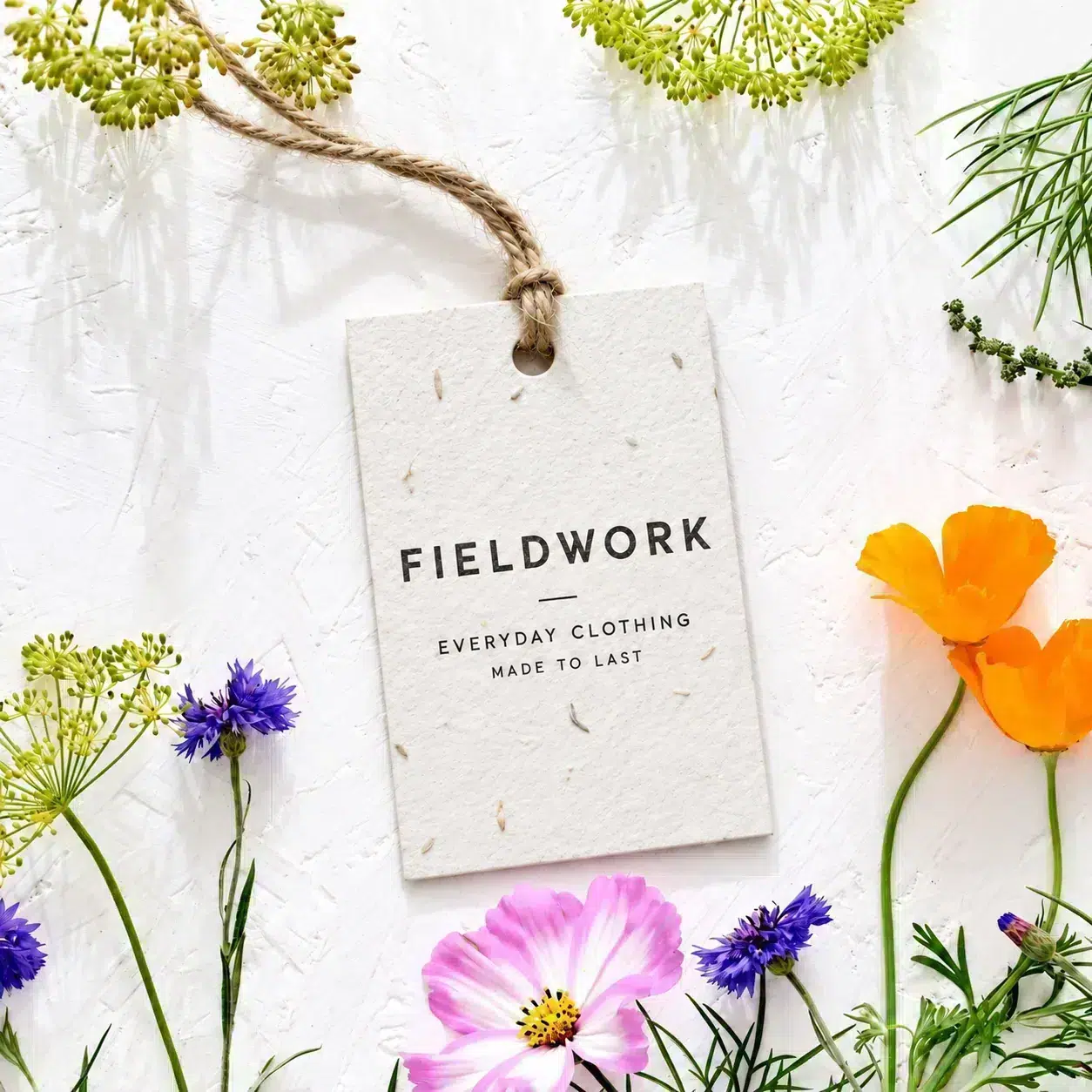
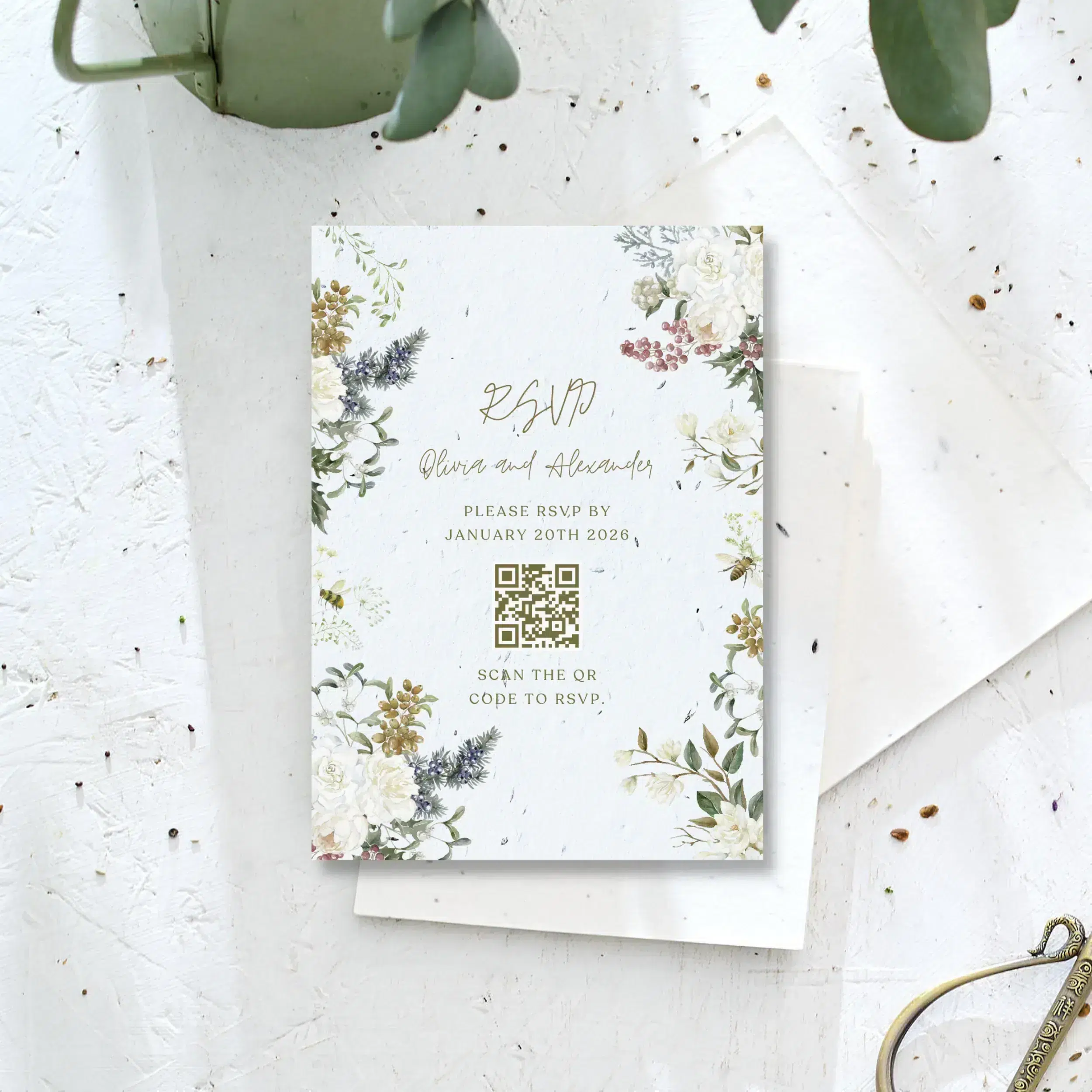
Plantable wedding stationery is printed on handmade paper with wildflower seeds embedded in the paper. It looks and feels like heavy, textured card, and it prints in full colour with water-based inks.
The difference? Soak it, lay it on soil, cover it with a thin layer of compost, and in ten to fourteen days it starts to sprout.
Our paper carries twelve species of UK native wildflowers plus native grasses: Ox-Eye Daisy, Red Campion, White Campion, Musk Mallow, Meadow Buttercup, Black Knapweed, Birdsfoot Trefoil, Black Medick, Common Vetch, Salad Burnet, Self Heal and Yarrow. All are native, so nothing you send out will cause a problem in a British garden.
Wedding invitation paper handmade in the UK
Here’s the full specification, so you can compare it with anything else you are looking at.
Weight. 280gsm. Heavier than a standard greeting card and roughly double a sheet of letterhead. It has weight in the hand without being stiff.
Thickness. 340 to 450 microns. The paper is handmade, so sheets vary slightly. That variation is what makes it look handmade rather than printed on textured stock.
Colour. Natural off-white, uncoated. Not brilliant white and not cream, with visible flecks of recycled fibre and the seeds showing through the surface.
Composition. Recycled post-consumer fibre, with the wildflower seed mix worked into the pulp rather than applied on top.
Standard size. A6, 105 x 148 mm, for invitations and RSVP cards. We also stock blank seed paper sheets in A4, A5, A6 and A7 if you are printing or crafting yourself. Custom sizes and shapes are quoted on request.
How it prints. Full colour, water-based inks. The paper is uncoated and textured so colours read softer than on a screen. Big blocks of solid colour fight the surface; keep ink coverage under about 40%, and you get a clean print with the texture still showing. Line work, botanical illustration and script type all sit beautifully on it. Heavy dark backgrounds, not so much.
Printing at home? Use an inkjet. Seed paper also takes offset, screen printing and letterpress well. Never put it through a laser printer: the heat cooks the seeds.
Can you write on seed paper?
Yes. Guest names on place cards, replies on RSVP cards, hand-addressing: all fine. Use a fine-liner, gel pen or a fountain pen with a broader nib; very fine nibs catch on the seeds. The paper is uncoated, so ink sinks in and dries fast instead of smudging. If you are hand-lettering a full set, practise on a couple of cards first.
Your wedding stationery timeline
Plantable stationery works best when it runs through the whole day. If you’re gathering eco-friendly wedding invitation ideas, this is the order most couples work in.
Six to twelve months out. Seed paper save the dates. Small, light and cheap to post, and the first thing that tells your guests what kind of wedding this will be.
Eight to twelve weeks out. Seed paper wedding invitations, sent with plantable rsvp cards so the replies come back on seed paper too. Once they are all in, you get to plant them.
On the day. Seed paper menus for the tables, place cards for each setting, and plantable note cards for everything else: table numbers, order of service, or a short note explaining what the paper is. That last one matters more than it sounds. Guests will not plant something they do not know is plantable.
Favours. Seed paper swing tags tied to favour bags, jars or bottles, with a planting line on the back.
After. Seed paper thank-you cards for all your attendees.
Eco friendly wedding stationery that’s genuinely sustainable
Plenty of wedding stationery is sold as eco friendly. Most is recycled card with a plastic laminate on top, which can’t be recycled again and will not compost.
Some is seeded card with the seeds glued to the surface, where they fall off in the envelope. Neither is what couples mean when they go looking for sustainable wedding invitations.
Seed paper is about as close to zero waste as printed stationery gets. It is biodegradable; it composts if it is not planted, and if it is planted, it leaves something behind that is better than nothing at all.
What makes ours different:
- Uncoated paper. No laminate, no foil, no plastic film. It composts as it is, and grows if you plant it.
- Recycled post-consumer fibre, made at a British mill and printed in Devon, not shipped in.
- Seeds worked into the pulp, not stuck on, so they are still there when the paper reaches the ground.
- Water-based inks throughout.
- Twelve UK native wildflower species, which is the part that actually helps. Most of Britain’s wildflower meadows have gone, and native species are what native pollinators feed on.
- The mill supports a working charity dedicated to preserving traditional papermaking.
Costs, quantities and lead times
Quantities. Most pieces start from 25 and are priced in tiers, single- or double-sided.
Turnaround. Four working days with free UK delivery. The clock starts when we have print-ready artwork, so allow time for artwork and proofs when you plan your timeline.
Proofs and artwork checks. You can request a proof before anything is printed, and we will tell you if anything in your design doesn’t sit well on the paper.
Samples. Sample packs are the sensible first step. Order one at least a month before the real order.
Custom work. A different size, shape or quantity: send it through our online quote form.
Wedding stationery FAQ
How long does seed paper last before it is planted? For years, if you keep it somewhere cool and dry. Keep it away from damp and direct sun. Not in a bathroom, not in a car.
When should guests plant it? Spring and early autumn are best in the UK. Outside those windows, plant it in a pot on a sunny windowsill. Full instructions on how to grow seed paper are here.
Will it grow if a guest just leaves it outside? Sometimes, but not reliably. It needs soil contact, a thin covering of compost and regular water for the first fortnight. Print a short planting line on the back of each piece.
Can we use our own design? Yes. Upload your own artwork, or start from one of our wedding invitation templates. We check every file before printing.
Is it more expensive than normal wedding stationery? It costs more than mass-printed cards and less than most letterpress or foiled options. You are paying for handmade paper rather than finishing.
What else is it used for? Seed paper business cards, our range of plantable cards and all the other products on our site are made with seed paper.